For those who wish to learn the hands-on practice of kintsugi, please take Kintsugi 101 as early as possible and register on the waiting list for the hands-on classes (Introduction to Kintsugi Level 1 & 2).
Kintsugi 101 (Lecture only)
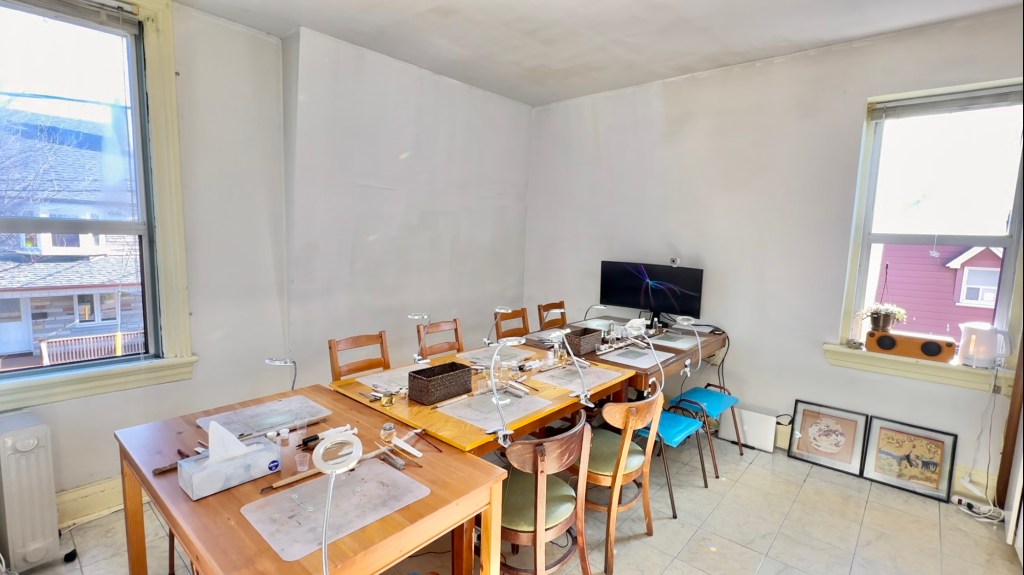
[Kintsugi 101] welcomes anyone interested in kintsugi. Dive into authentic kintsugi knowledge -the history, philosophy, and mindset of kintsugi- that you won’t find on the internet or in books. This class also covers essential content for progressing to [Introduction to Kintsugi Level 1 & 2]. If you’re considering hands-on learning of kintsugi, be sure to take thorough notes.
⭐ [Kintsugi 101 (Kintsugi Lecture)] ― $80
1. This is a hybrid class of in-person and online, limited to the first 9 people who apply.
2. This is a 3-hour lecture in one day, at Kintsugica atelier (Near Christie Pits Park, Toronto) and online. It doesn’t include any hands-on work.
3. Schedule:
2026
April 5 10am-1pm
April 7 6-9pm
*The class opens when it has more than 3 students. Please pick up your available dates when you apply.
*Deposits or fees will be refunded immediately if a class does not have 3 or more students and it is decided not to open.
4. You will learn Kintsugi’s history, philosophy, materials, and the Japanese mindset of traditional artisanship (Kogei).
5. When you are planning to move on to the next level, please check the schedule of [Introduction to Kintsugi Level 1] below.
Kintsugi Introductory Class (Hands-on class)
Please note: We don’t offer any fake kintsugi.
We’re not accepting new students at the moment. Please take Kintsugi 101 first and join the waiting list.
[Introduction to Kintsugi Level 1 & 2] are preparations to start the kintsugi journey. To take these classes, completion of Kintsugi 101 is required.
In these classes, you can develop qualities such as patience, mental focus, and an appreciation for harmony, as well as gain insights into Japanese philosophy through the practice of kintsugi. The class also includes a lecture on the basic knowledge of materials, and practice of handling and cleaning tools. You will spend 4 days for Level 1 and 5 days for Level 2, but all steps in each day have an important meaning. After taking these Introduction classes, you can move on to the [Regular class].
⭐ [Introduction to Kintsugi Level 1] ― $420
1. This is a hybrid class of in-person and online, limited to the first 9 people who apply.
2. This course will include 4 introduction classes (120 minutes each), at Kintsugica atelier (Near Christie Pits Park, Toronto).
3. Schedule: Total 4 days
The schedule will be added someday.
When you prefer weekday daytime, please let us know your availability as much as possible. The class will open when we have more than 3 students.
Make-up class: Join another class or a regular class (ask the dates): $20
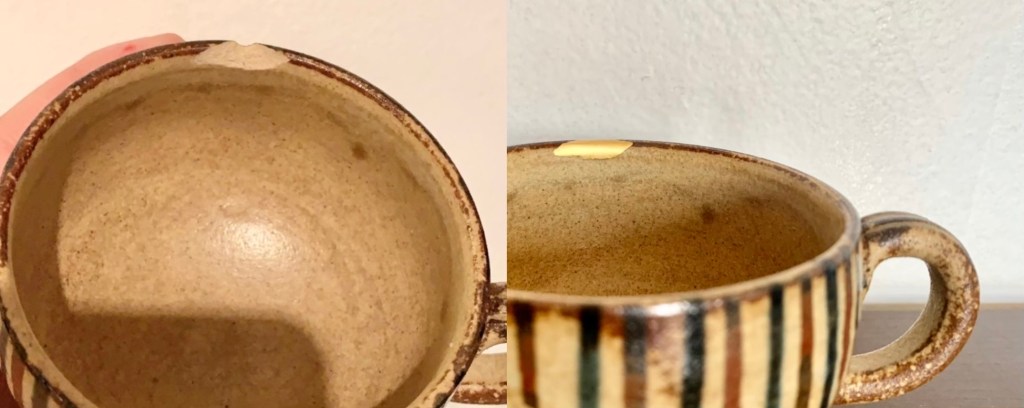
4. You will learn Kintsugi’s history, philosophy, the Japanese mindset to traditional artisanship (Kogei), how to prepare/treat/clean materials and tools, and how to do Kintsugi on a chipped piece with a simplified process.
*You cannot use broken (separated) or cracked pieces in this class.
5. Materials and tools will be provided during the class.
6. The chipped part’s depth should be up to 2mm. If you don’t have a chipped piece, we can prepare one for you.
7. Students who finished [Kintsugi 101] will be able to take this class.
Apply now!
⭐ [Introduction to Kintsugi Level 2] ―$650
1. This class is an in-person group class, limited to the first 9 people who apply.
2. This course will include 5 introduction classes (180 minutes each).
3. Schedule:
The schedule will be decided in the Level 1 class.
Make-up class: Join a regular class (ask the dates): $20
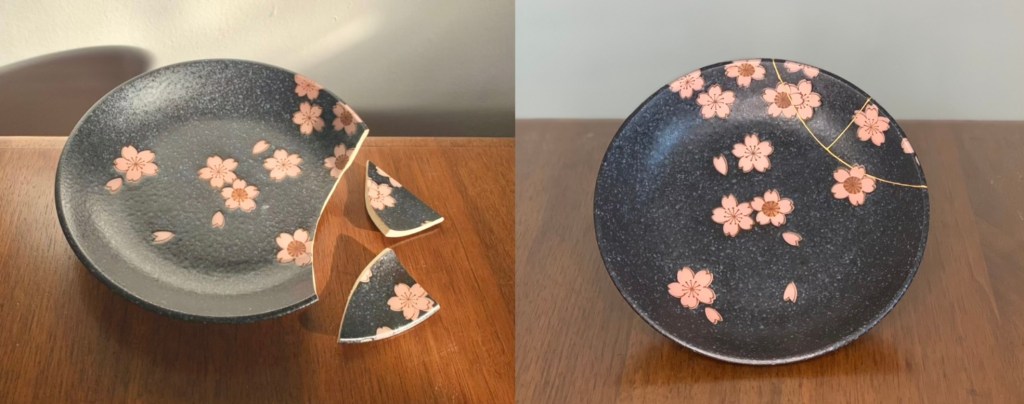
4. You will learn deeper knowledge about urushi, how to create your own tools, the structure of Kintsugi, and how to do Kintsugi on broken (cracked and separated) pieces with a basic method.
5. Materials and tools will be provided during the class.
6. Only students who finished [Level 1] can take this class.
Kintsugi Regular Class (Hands-on class)
[Regular class] is not a scheduled class, so you can come whenever you want. We recommend attending the class once a week or more frequently. In the class, you keep practicing basic processes and we fix your skill each time. Our advice, guide, new techniques, new materials, and new tools will be given depending on your skill and mindset. Please know – ceramic has many kinds of clay, glaze, decoration, shape, and damage, and we have to treat them in different ways. Kintsugi looks simple, but it’s not. We are an artist, but also a doctor of ceramics at the same time. In addition to the kintsugi technique, you can also explore other urushi arts, including Maki-e and urushi coating. The Regular Class includes time for you to experiment and learn through trial and error. While basic instructions will be provided, don’t be afraid of making mistakes—feel free to make plenty of them!
⭐ [Regular Class] at Kintsugica’s atelier
1. This class is an in-person group class for up to 9 people
2. The schedule is announced in our student community. The location is at Kintsugica’s atelier (Bloor and Christie, Toronto).
3. You will learn deeper knowledge about urushi, and how to do Kintsugi on items below
– unglazed
– having small/big missing parts
– having big chips
– having gold paint
– having many pieces
– vase or tokkuri (having small neck)
– doll (3 dimensional piece)
– broken handle of a cup
– design kintsugi
– yobitsugi, tomotsugi, tametsugi etc.
4. Materials and tools can be provided during the class. (+$5 each time, +$20 for applying gold) You can also use your own kit.
5. Only students who finished [Level 2] can take this class.
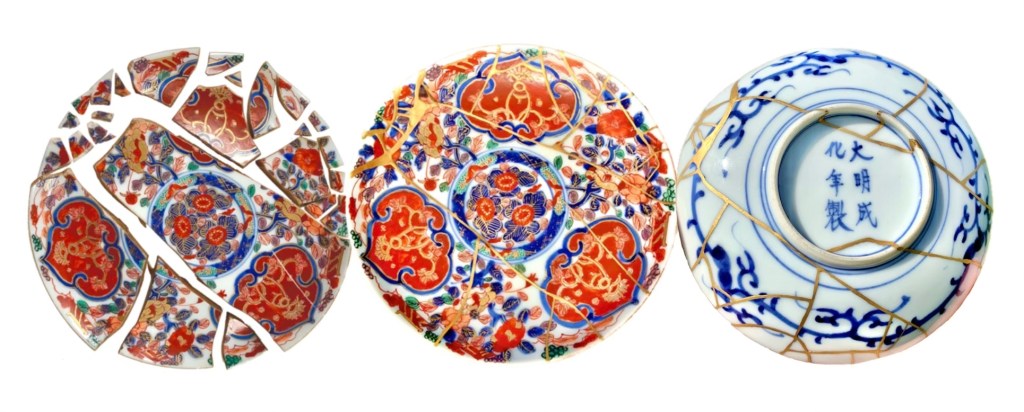
★ $=CAD.
★ Kintsug kit is not included in any class. Students can buy the Kintsugica’s Kintsugi kit.
Shuichi’s Kintsugi workshop is a very valuable experience for those who are interested in the art of Kintsugi. He makes certain to carefully communicate the history, reasoning and methodology of the art so that you really understand what Kintsugi is and how and why it’s done.
-Karen
There is a reason that the remnants of the oldest civilizations we are commonly able to find are generally pottery shards. Once fired, clay is forever formed. It makes sense to value and repair pottery in light of its enduring nature. Kintsugi is an art of repair which not only makes the resultant piece stronger than the original piece, it is also food safe, and beautifully highlights the repair instead of hiding it. It’s a repair that only adds value and beauty to a piece and showcases it’s history. It’s an art form which renders still usable a piece which may hold sentimental value or may in turn render sentiment to a useful piece.
Shuichi is an excellent teacher who very well imparts his feelings for the craft along with the techniques. He is good at communicating and teaching the skills required of the art form. Equally so in imparting the understanding required to practise it. I highly recommend this workshop to those with a desire to restore a well loved piece or to those with a desire to understand the art form.
How to Apply
■ How to Apply
Send a message using the contact form below, indicating your interest in the style of classes. You will receive a confirmation email within 5 days with payment information. Please reply with a photo of the item you want to fix. If you do not have an item, one will be provided (+$15).


 Intro Japan