OPEN ATELIER
Streaming LIVE on Instagram and Facebook almost every day – Please follow us! [instagram] [Facebook]
Kintsugi class has begun!
Now recruiting new students.
Go to the class page
About Kintsugi
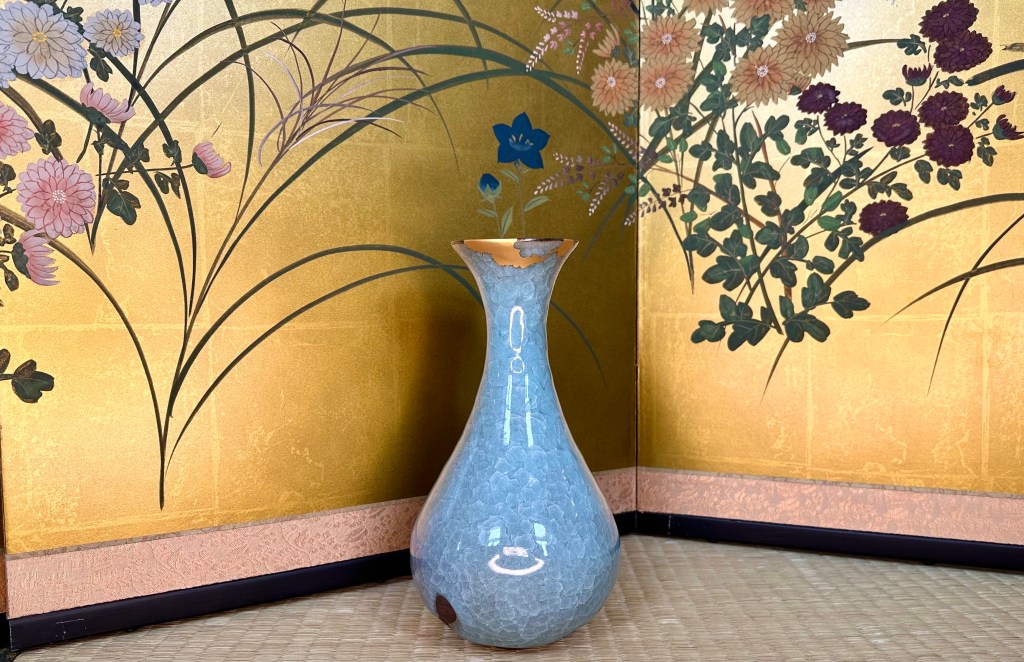
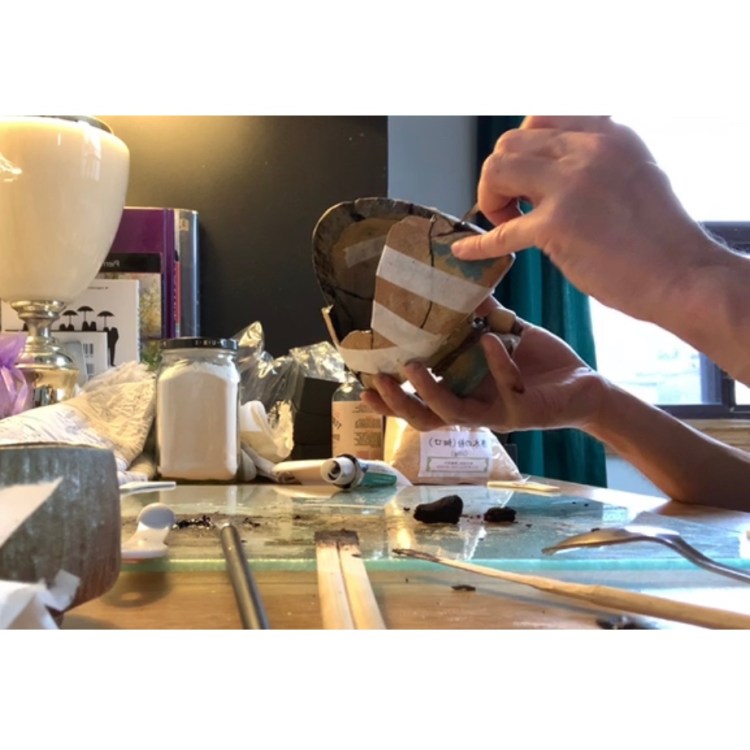
Kintsugi is a traditional Japanese art and repair technique that restores broken items to practical use. In the Kintsugi process, no chemical materials are used. Instead, it employs Urushi, a sap that has been used in Japan for over 10,000 years, to bond the fragments and embellish the surface with pure gold.
Rather than denying or concealing the resulting scars, Kintsugi embraces them and elevates the object to a new level of beauty. It signifies that something does not become lost or disconnected when it breaks but instead forms a stronger connection, which can be an inspiration for our own lives.
About Urushi
Urushi is a sap obtained from the Urushi tree, making it an entirely natural and sustainable material. It is used in every stage of kintsugi, including priming, adhesive, gap filling, and repairing missing parts. When you create scratches on the surface of the Urushi tree, it exudes Urushi to heal those scars. Only a small amount, approximately 200ml, can be collected from a single Urushi tree, making it an exceedingly precious resource. We are grateful to Urushi for its healing properties, which allow us to restore cherished objects.
The Urushi tree offers more than just Urushi; it provides various other blessings. Its flowers yield honey, nuts can be used to make tea, new shoots are perfect for tempura, and wood chips can enhance the flavor of hotpot dishes.
Artworks created with Urushi have been objects of envy worldwide for a long time. Particularly, Maki-e works using Urushi and gold dust swept through Europe during the 16th to 18th centuries, captivating kings and nobility from different countries who eagerly sought them. Even Marie Antoinette avidly collected Maki-e, and Maria Theresa famously said, “All the diamonds in the world are nothing to me. Maki-e are the only things that give me pleasure.” In Europe, many imitations of Maki-e were produced, and they were referred to as “Japanning.” This reflects the strong association between Japan and the art of Urushi.
More About Urushi
History: The Japanese have used urushi for over 9000 years. People knew urushi made things very strong. They coated their everyday goods and ritual utensils with urushi and used it as an all-purpose glue. Nowadays, we still use urushi to coat tableware, create art, preserve historical architecture, and so on.
Antibacterial effect: In new year celebrations, the Japanese have kept various food in exquisite bento boxes coated with urushi and eaten from them (Osechi) for 3-4 days before the era of refrigeration. The antibacterial effect of urushi enables it to preserve the freshness of food items. When bacteria such as E. coli, MRSA, salmonella and Vibrio parahaemolytics are left on the surface of dried urushi, they decrease to half their original amount in 4 hours, and disappear completely in 24 hours.
Other
Real gold or silver: In the final process, all cracked or chipped marks are decorated with real gold or silver. We only use 24K gold and sterling silver.
Detailed skill and finishing: Japanese culture values harmony. The balance of beauty is created by carefully evaluating each piece. The work is finished by polishing it with very fine powder.
Cherish your item: In Japanese culture, many inanimate objects are said to have spirits. This belief is important to the Kintsugi technique. Give thanks to your item, the process by which your item came to you, the time which you spend with your item, and the responsibility to keep cherishing it. The item will generate happiness in others and in turn bring you happiness.
Mottainai: This Japanese word translates to “a sense of sin to throw away something and one of regret over waste.” This concept encourages strict and advanced recycling systems in Japan. Think “mottainai” to be inspired by this philosophy.
Price
To receive a final quote: Mail or bring your piece to our atelier.
How to order
・Send a email to introjapanca@gmail.com
・Send a message to instagram account or Facebook messenger
 Intro Japan